Hair Restoration and Cosmetic Treatment Options for Transgender Individuals
Everyone has different concerns, and there isn’t one treatment plan that suits everyone. The following options explain some procedures that may be considered based on individual needs, anatomy, and treatment goals.
1. Hair Transplant – A Hairline That Feels More Like You
Sometimes, the concern isn’t simply hair loss but how the hairline frames the face.
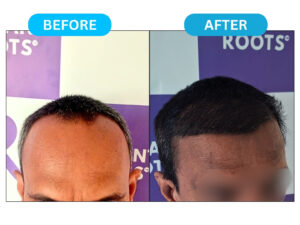
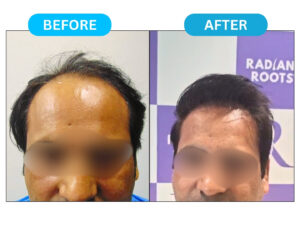
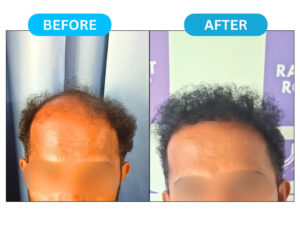
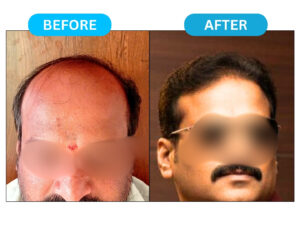
Hair transplantation involves moving healthy hair follicles from a donor area, usually the back or sides of the scalp, to areas where additional coverage is needed. With Follicular Unit Extraction (FUE), individual follicular units are extracted and carefully placed into the recipient area under local anaesthesia.
- For transgender women: Hair transplantation may help fill receding temples or create a softer, more rounded hairline.
- For transgender men: It may address scalp hair thinning or improve beard coverage in suitable cases.
Planning considers donor hair availability, facial proportions, existing hair density, and future hair loss. New growth develops gradually over several months.
2. Front Hairline Reduction – Exploring Your Preferred Hairline Shape
Hairline position can influence facial proportions. For individuals who wish to reduce forehead height or change the appearance of their hairline, surgical and non-surgical approaches may be considered.
- Hairline lowering surgery: The procedure involves making an incision along the planned hairline and advancing the hair-bearing scalp forward. The excess forehead skin is removed, and the incision is closed carefully.
- Hair transplantation: Individual follicles are extracted from a donor area and implanted along the hairline to add density, fill recessed temples, or create a different outline.
Hairline lowering may be considered as part of facial feminisation for some transgender women. Suitability depends on scalp laxity, hair density, forehead anatomy, hair loss patterns, and the possibility of visible scarring.
3. Breast Implants – Understanding Your Options for Breast Development
Breast development during feminising hormone therapy varies. When additional volume or a different breast contour is being considered, breast augmentation with implants may be one option.
How does the procedure work?
- Planning: Chest width, existing breast tissue, skin elasticity, and desired proportions are assessed to determine suitable implant dimensions and placement.
- Incision and placement: Under anaesthesia, an incision is made, commonly in the breast crease. A silicone or saline implant is placed either beneath the breast tissue or under the chest muscle, depending on the surgical plan.
- Closure and recovery: The incision is closed, and post-operative instructions are provided to support healing.
Risks include infection, changes in sensation, capsular contracture, and possible future implant replacement or removal. Implant choice and placement are individualised. No particular breast size or shape is necessary.
4. Laser Hair Removal – When Facial Hair Continues to Grow
Hormone therapy may reduce facial and body hair growth in some individuals, but it does not reliably eliminate existing terminal hair. Laser hair removal may be considered for areas where unwanted hair continues to grow.
The procedure uses controlled pulses of light that are absorbed by melanin in the hair. This energy heats the hair follicle and reduces its ability to produce new hair. Treatment is performed over the selected area, with cooling methods used when appropriate to protect the surrounding skin.
- Treatment areas: Upper lip, chin, jawline, neck, chest, back, and legs.
- Sessions: Multiple sessions are usually required because hair follicles respond best during particular growth phases.
- Response: Depends on hair colour, thickness, skin tone, and hormonal influences.
Electrolysis may be suitable for lighter-coloured hairs that do not respond well to laser treatment.
5. Skin Whitening and Pigmentation Treatments – Caring for Uneven Skin Tone
Acne marks, sun exposure, shaving-related irritation, and hormonal influences can contribute to uneven pigmentation. Treatment aims to address these specific concerns rather than change an individual’s natural skin colour.
The approach depends on the type and depth of pigmentation, skin tone, and sensitivity.
Options may include:
- Topical treatments: Ingredients such as azelaic acid, retinoids, or other prescribed pigmentation agents may help regulate excess pigment and improve the appearance of dark marks over time.
- Chemical peels: Selected exfoliating solutions are applied to the skin for a controlled period to remove superficial dead skin cells and improve uneven pigmentation.
- Laser procedures: Specific wavelengths target pigment deposits in selected conditions. Device choice and settings require careful assessment, particularly in darker skin tones.
Daily sunscreen helps reduce further sun-related pigmentation. Treatment response varies, and some pigmentation conditions may require ongoing care.
6. Glutathione Treatments – What Should You Know?
Glutathione is a naturally occurring antioxidant that helps protect cells from oxidative stress. It also participates in processes involved in melanin production, the pigment responsible for skin colour. This is why it is sometimes discussed as a possible skin-lightening treatment.
What should you know about its use?
- Proposed action: Glutathione may influence melanin production and the balance of different melanin types. However, the extent of any visible skin-lightening effect is not well established.
- Available preparations: It is available in oral supplements and injectable forms, both of which have been promoted for cosmetic pigmentation concerns.
- Evidence and safety: Research supporting meaningful, lasting cosmetic benefits remains limited. Injectable glutathione is not recommended for routine skin lightening because its effectiveness is uncertain and serious adverse reactions are possible.
There is no established skin-lightening benefit specific to transgender individuals. The quality and safety of glutathione products may also vary. For pigmentation concerns, established dermatological treatments such as prescribed topical agents, selected chemical peels, and appropriate laser procedures are generally preferred.
7. Carbon Peel – A Fresh Approach to Oily and Congested Skin
Testosterone therapy may increase sebum production in some individuals, making the skin oilier and more prone to clogged pores and breakouts.
A carbon laser peel uses a medical-grade liquid carbon solution followed by laser treatment to remove accumulated oil, dead skin cells, and surface impurities.
How does the procedure work?
The treatment generally takes 30–45 minutes and involves three steps:
- Carbon application: A thin layer of liquid carbon is spread over cleansed skin and left to dry for 10–15 minutes. The carbon particles settle into pores and bind to excess oil and debris.
- Laser application: A Q-switched or picosecond laser is passed over the skin to heat and target the carbon particles.
- Carbon vaporisation: Further laser passes break down and remove the carbon particles along with attached impurities and dead skin cells.
The treatment may help with:
- Excess surface oil
- Clogged pores and skin congestion
- Mild acne and rough skin texture
- The appearance of enlarged pores
After the procedure, the skin is cleansed and moisturised, with sunscreen applied for protection. Mild redness or sensitivity may occur. Results vary, and persistent acne may require additional medical treatment.
8. MNRF – Caring for Skin After Acne
Acne can sometimes leave depressed scars, uneven texture, and visible pores even after active breakouts have settled. Microneedling radiofrequency (MNRF) combines controlled needle penetration with radiofrequency energy to stimulate collagen remodelling within the skin.
During the procedure, a device with fine needles is applied to the treatment area. The needles create controlled micro-injuries and deliver radiofrequency energy at selected depths. This process triggers a healing response that may gradually improve the appearance of certain acne scars and skin texture.
MNRF may be considered for:
- Selected depressed acne scars
- Uneven skin texture
- Certain enlarged-looking pores
Treatment depth and settings depend on scar type, skin thickness, and pigmentation risk. Temporary redness, swelling, or pinpoint marks may occur. Improvement develops gradually over multiple sessions, and results vary between individuals.
Acne scars vary in depth, shape, and structure, so treatment is selected according to the type of scar rather than using one procedure for everyone.
Possible approaches include:
- Fractional laser: Delivers controlled energy into selected areas of the skin, encouraging collagen remodelling and gradual improvement in scar texture.
- Microneedling: Uses fine needles to create controlled micro-injuries that stimulate the skin’s repair response.
- Subcision: A small needle is passed beneath certain depressed scars to release fibrous bands that pull the skin downward.
- Chemical reconstruction: A concentrated chemical solution is applied to selected narrow, deep scars to encourage new tissue formation.
Active acne is generally managed before scar procedures are started. The number of sessions and recovery period depend on the treatment used. Improvement is gradual, and complete scar removal cannot be guaranteed.
How Can Hormone Therapy Affect Your Hair and Skin?
Hormone therapy can bring changes that are expected, unexpected, or simply unfamiliar.
Some concerns include:
- Hormonal acne: Testosterone may increase oil production and breakouts.
- Scalp thinning: Androgen-related hair loss may occur in susceptible individuals.
- Skin dryness: Feminising hormones may reduce skin oiliness.
- Ingrown hairs: Frequent shaving can contribute to irritation and dark marks.
- Pigmentation changes: Hormonal influences may contribute to uneven skin tone.
Many of these concerns can be managed alongside hormone therapy with appropriate medical guidance.