PRP for Hair Loss: How Many Sessions Are Enough for Effective Results?
PRP Therapy is a promising non-surgical treatment for hair loss. It is ideal for people experiencing early hair thinning or increased hair fall. The number of PRP sessions required depends vastly on individual factors like hair loss severity and overall health.
It’s pretty fascinating, actually. PRP therapy for hair regrowth works by using blood cells’ healing components to support hair regrowth. Instead of masking the problem temporarily, the treatment focuses on improving the environment around existing follicles so they can function better.
Understanding PRP Therapy for Hair Growth
PRP stands for Platelet-Rich Plasma. It is a concentrated portion of your own blood that contains platelets, growth factors, and proteins involved in tissue repair and healing.
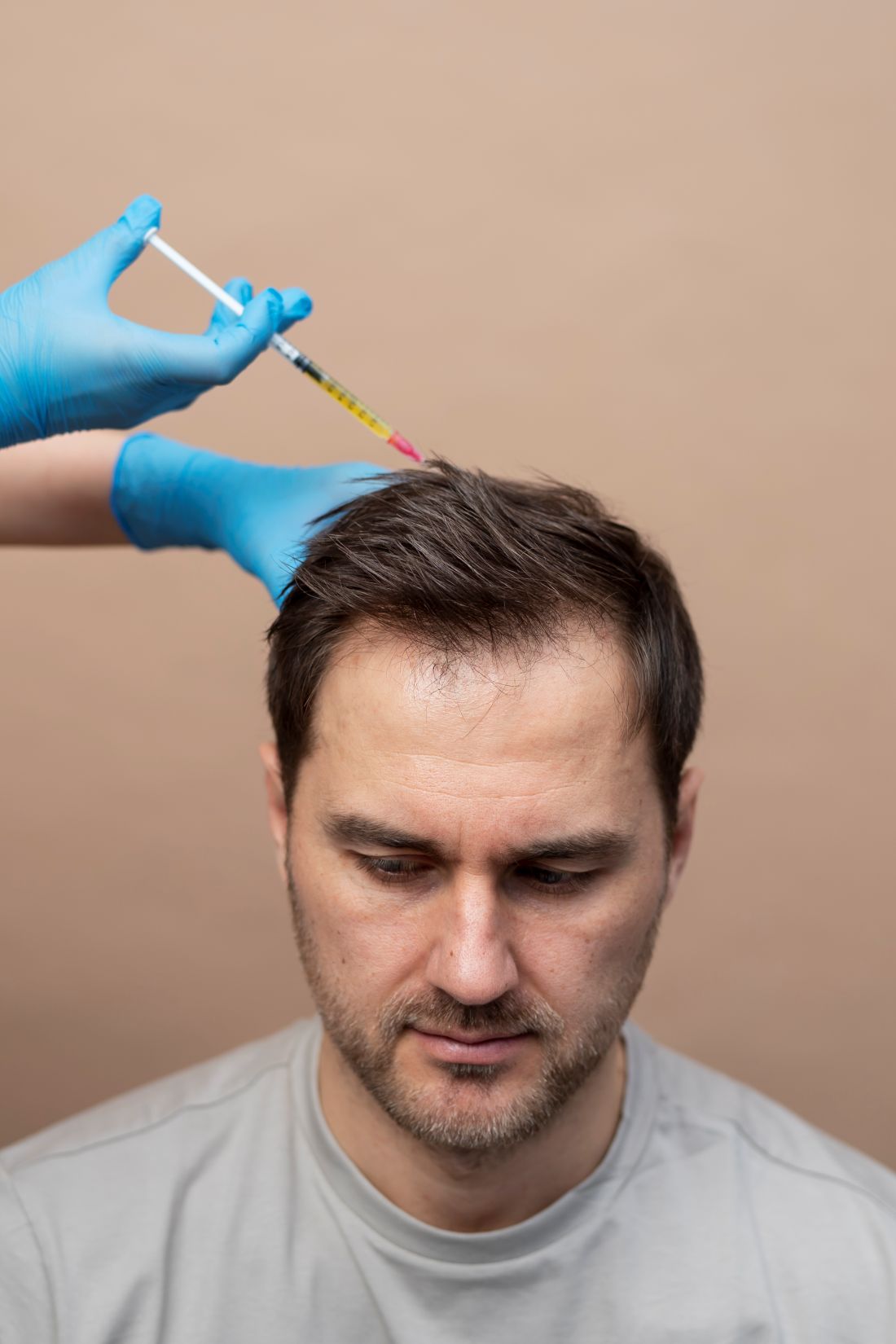
At Radiant Roots Hair Transplant & Aesthetic Surgery Centre, a small amount of blood is drawn from the patient and centrifuged to separate platelet-rich plasma. This concentrated plasma is then injected into targeted areas of the scalp.
The best part of PRP? It uses your body’s own natural components. There are no artificial implants or foreign substances involved in the process.
How PRP Works for Hair Loss
Hair follicles need a healthy environment to grow properly. Factors like stress, hormonal imbalance, genetics, inflammation, poor scalp health, and nutritional deficiencies can weaken follicles over time.
PRP for hair loss works by delivering growth factors directly into the scalp. These growth factors may:
- Support weakened hair follicles
- Improve blood supply around follicles
- Enhance scalp healing
- Reduce excessive shedding
- Improve hair thickness and texture
- Encourage healthier hair growth cycles
However, it is important to understand one thing clearly:
PRP does not create new hair follicles. It supports existing weak follicles that are still active.
Factors Influencing PRP Sessions
The number of PRP sessions for hair growth varies from person to person. Several factors influence how your scalp responds to treatment.
Hair Loss Severity
Mild shedding and early thinning usually respond faster than advanced hair loss. Patients with diffuse thinning may require fewer sessions compared to those with progressive pattern baldness.
Stage of Hair Thinning
Early-stage hair loss often shows better improvement because follicles are still alive and capable of responding to stimulation.
Scalp Health
An unhealthy scalp can affect treatment outcomes. Conditions like dandruff, inflammation, itching, fungal infections, or excessive oiliness may need attention alongside PRP therapy.
Age and Genetics
Genetics play a major role in hair loss progression. Younger patients with early intervention may notice better response rates compared to individuals with long-standing hereditary baldness.
Overall Health
Nutritional deficiencies, thyroid imbalance, hormonal changes, autoimmune conditions, anemia, and chronic stress can influence PRP results.
Vitamin D deficiency, iron deficiency, and low B12 levels are especially common contributors to excessive hair fall.
Treatment Consistency
PRP therapy for hair regrowth usually requires multiple sessions because hair growth occurs gradually in cycles. Skipping sessions or stopping treatment too early may affect outcomes.
That is exactly why there is no “one-size-fits-all” answer when it comes to PRP for hair loss. Some people notice reduced hair shedding after a few sessions, while others may require a longer treatment plan to support visible improvement in hair density and scalp health.
How Many PRP Sessions Are Usually Needed?
This is one of the most common questions patients ask.
And no, it is not a treatment where one appointment transforms the scalp overnight.
In general:
- Mild hair fall may require fewer sessions
- Early thinning may need multiple sessions over several months
- Pattern hair loss often benefits from a structured treatment plan
- Advanced baldness may not respond effectively to PRP alone
PRP for hair loss usually works in phases because hair follicles need repeated stimulation over time. The exact number of PRP sessions for hair growth depends on individual needs.
Initial Phase: Require 3 to 4 PRP sessions spaced about 4 to 6 weeks apart.
This early phase focuses on:
- Stimulating weak but active hair follicles
- Improving blood circulation to the scalp
- Reducing excessive shedding
- Supporting healthier follicle activity
- Creating a better scalp environment for hair growth
Consolidation Phase: After the initial sessions, many patients continue with 1 or 2 additional sessions over the next 2 to 3 months, depending on their response.
This phase aims to:
- Strengthen newly responding follicles
- Improve hair shaft thickness
- Support more consistent growth cycles
- Enhance visible density gradually
Maintenance Phase: Maintenance sessions of PRP treatment for hair loss involves:
- 1 session every 4 to 6 months, or
- 2 to 3 sessions per year, depending on ongoing hair loss activity
The goal of maintenance therapy is to:
- Sustain follicle health
- Slow progressive thinning
- Maintain improvements in density and texture
- Support long-term scalp health
The exact number varies because every scalp behaves differently. Someone with stress-related hair fall may improve faster than a patient with long-term androgenetic alopecia.
Is One PRP Session Enough for Hair Growth?
In most cases, one PRP session is usually not enough for fuller hair growth results.
Hair grows in cycles. Follicles move through active growth, transition, and resting phases. PRP works gradually by repeatedly stimulating weakened follicles over time.
Think of it this way: a single workout does not build muscle. Similarly, one PRP session rarely provides enough biological stimulation to sustain long-term improvement.
PRP Hair Treatment Timeline
Hair restoration requires patience. Visible changes usually happen gradually rather than instantly. Here’s a general timeline patients may experience with PRP treatment for hair loss:
| Timeline | What Patients May Notice |
| After 1 Session | Scalp stimulation begins internally, but major visible changes are usually not expected this early. |
| After 4–6 Weeks | Some patients may notice reduced hair shedding and less hair fall while washing or combing. |
| Around 3 Months | Hair texture, strength, and shedding patterns may start improving. Existing hair can appear healthier and thicker. |
| Around 4–6 Months | Improvement in hair density may become more noticeable, especially in areas with early thinning. |
| Around 6–12 Months | Maintenance sessions may help sustain results and support ongoing follicle health. |
Factors Influencing PRP Treatment for Hair Loss
Several lifestyle and medical factors influence how well PRP for hair loss works.
DHT-Related Hair Loss
Androgenetic alopecia, also called pattern hair loss, is linked to sensitivity to DHT hormones. PRP may help support follicles, but ongoing hair loss progression may still continue without proper management.
Thyroid Problems
Both hypothyroidism and hyperthyroidism can contribute to diffuse hair thinning.
Iron Deficiency
Low iron levels can weaken follicles and increase hair shedding, especially in women.
Vitamin D and B12 Deficiency
Nutritional deficiencies can directly affect scalp and follicle health.
Dandruff and Scalp Inflammation
Inflamed scalps often respond poorly to hair regrowth treatment unless underlying conditions are controlled.
Stress and Poor Sleep
Chronic stress can push hair follicles into the shedding phase. Poor sleep may also affect hormonal balance and recovery.
Smoking
Smoking affects circulation and tissue oxygenation, which may interfere with scalp healing and follicle support.
Treatment Consistency
Patients who follow recommended schedules and scalp care advice generally experience better outcomes.
Who Is the Right Candidate for PRP Therapy for Hair?
PRP treatment in Mangalore is best suited for men and women with early hair thinning, active hair fall, reduced density, or weakening follicles. It may also support patients after hair transplant surgery or those seeking a non-surgical hair regrowth treatment before considering advanced restoration procedures.
When PRP Alone May Not Be Enough
PRP is not a magic solution for every stage of hair loss.
Patients with the following concerns may require additional approaches:
- Advanced bald patches
- Shiny bald scalp areas
- Long-standing inactive follicles
- Severe hereditary baldness
- Extensive hairline recession
Once follicles are permanently inactive, PRP cannot revive them.
In advanced cases, a hair transplant may be discussed as a more effective long-term option. Consider consulting a qualified hair transplant surgeon in Mangalore to evaluate whether your follicles are still salvageable or surgical restoration is needed.
Can PRP Be Combined With Other Hair Loss Treatments?
Depending on the patient’s condition, PRP may be combined with:
- Medications like Minoxidil or Finasteride are suitable for pattern hair loss
- Growth factor or mesotherapy treatments for additional follicle stimulation
- Hair transplant after graft healing to improve the surrounding hair density
- Anti-dandruff and scalp treatments to reduce inflammation and improve scalp health
- Nutritional correction for iron, Vitamin D, or B12 deficiencies linked to hair fall
- Lifestyle and stress management support for stress-induced shedding
Dr. Chandra, one of the top hair transplant surgeons in Mangalore, typically recommends personalized combination-based hair regrowth treatment plans rather than relying on PRP therapy alone.
What to Expect Before and After PRP for Hair Loss
Understanding the process helps patients feel more comfortable before starting treatment.
Consultation
The scalp, hair density, medical history, lifestyle factors, and hair loss pattern are evaluated first.
Blood Draw
A small quantity of blood is collected, similar to a routine blood test.
PRP Processing
The blood sample is processed in a centrifuge to separate platelet-rich plasma.
Scalp Injection
The concentrated PRP is injected into targeted scalp areas experiencing thinning.
Post-Treatment Side Effects and Care
Mild soreness, tenderness, redness, or scalp sensitivity may occur temporarily after treatment.
Radiant Roots uses advanced PRP technology to maximize treatment effectiveness with zero to minimal downtime.
Request A Consultation
We are in an era where everything “organic” is preferred. Interestingly, PRP Therapy is a natural source of hair regrowth. It is truly your body healing itself with the slight assistance of scientific expertise.
According to Dr. Chandra, Hair Transplant Surgeon in Mangalore, consistency matters more than quick fixes. Hair restoration is a gradual biological process, and he works toward achieving realistic aesthetic goals. To request a consultation, message us securely or call us at +91 96060 13845. Make an informed decision for the desired outcome!