What Are the Common Causes of Hair Loss in Men and Women?
Finding more strands on your pillow, noticing a widening part, or seeing your ponytail feel thinner than it used to — these small changes often trigger the same question: is this normal, or is something actually wrong?
Hair shedding and hair loss are not always the same thing. Everyone sheds hair daily as part of a natural cycle, but when shedding outpaces regrowth, or when a pattern starts to form — a receding hairline, a bald patch, visible scalp — it points to an underlying cause that's worth understanding.
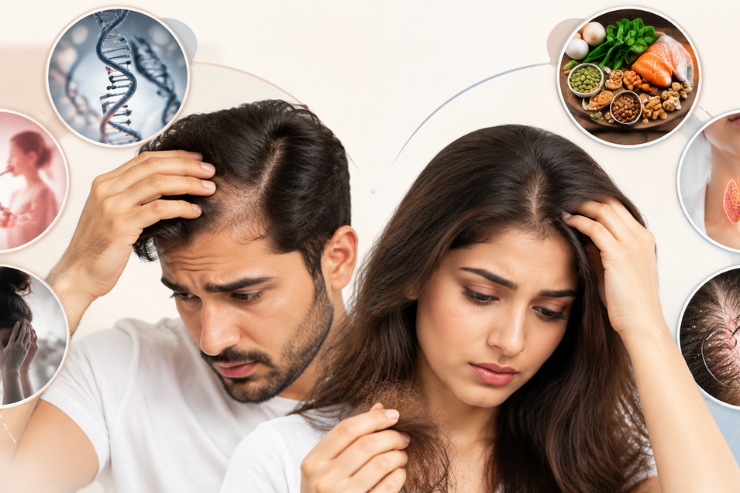
Genetics, hormones, nutrition, medical conditions, stress, scalp health, and even hairstyling habits can all play a role. Before thinking about getting a hair transplant in Mangalore or any restorative option, it helps to understand why hair loss is happening in the first place.
What Causes Hair Loss?
Hair grows in cycles — a growth phase, a brief transition phase, and a resting phase before the strand sheds and a new one begins. Losing around 50–100 hairs a day is considered part of this normal cycle.
Noticeable hair loss happens when this balance is disrupted — either too many follicles enter the resting phase at once, or replacement hair doesn't grow back the way it should.
So the real question isn't just how much hair you're losing — it's why, and what pattern it's following.
1. Hereditary or Genetic Hair Loss
This is the most common cause of hair loss worldwide, and it affects men and women differently.
In men
- Receding hairline, often starting at the temples
- Thinning at the crown
- Gradual, progressive reduction in density over the years
In women
- Widening of the central hair part
- Diffuse thinning across the crown
- Frontal hairline usually stays more intact than in men
Genetic hair loss isn't about "too much hair fall" on a given day — it's a gradual miniaturisation of hair follicles in genetically predisposed areas, where each new hair grows back finer and shorter until the follicle eventually stops producing visible hair.
2. Hormonal Changes
Hormones influence the hair growth cycle directly, which is why shifts in hormonal balance often show up as changes in hair density.
Common hormonal triggers include:
- Pregnancy and the postpartum period
- Menopause
- PCOS-related hormonal shifts
- Thyroid imbalances
In women, hormonal causes tend to show up as diffuse thinning rather than a defined receding hairline — which is one reason hormonal and genetic hair loss can sometimes look similar and need proper evaluation to tell apart.
3. Stress, Illness, and Telogen Effluvium
A sudden physical or emotional shock can push a large number of follicles into the resting phase at once. This is called telogen effluvium, and it's more common than most people realise.
Typical triggers include:
- A major illness, fever, or surgery
- Significant emotional stress
- Rapid weight loss or a drastic diet change
- Childbirth
What makes this confusing for most people is the delay — shedding often becomes noticeable weeks or months after the triggering event, not immediately. It's also important to note that everyday, ordinary stress does not cause hereditary baldness. This type of hair loss is usually temporary and improves once the trigger resolves.
4. Nutritional Deficiencies
Hair follicles are metabolically active tissue, so they're sensitive to what's missing from your diet. Deficiencies commonly linked to hair thinning include:
- Iron
- Protein
- Zinc
- Certain vitamins, including biotin
That said, this isn't a cue to self-prescribe "hair vitamins." A deficiency-related cause needs to be confirmed through proper assessment — taking supplements without knowing the actual cause rarely solves the problem and can sometimes mask a more relevant issue.
5. Thyroid and Other Medical Conditions
Sometimes hair loss isn't the main problem — it's a symptom of something else happening in the body. Conditions that can affect hair growth include:
- Thyroid disorders (both underactive and overactive)
- Anaemia
- Autoimmune conditions
- Certain chronic illnesses
This is one of the reasons a proper evaluation matters more than guessing based on appearance alone.
6. Alopecia Areata and Other Scalp Conditions
Alopecia areata is an autoimmune condition where the immune system mistakenly attacks hair follicles. It looks and behaves very differently from genetic thinning:
- Sudden, round or oval bald patches
- Can affect eyebrows or beard hair in some cases
- Onset is often quick, unlike the gradual pattern seen in genetic hair loss
Scalp infections and certain inflammatory or scarring conditions can also cause hair loss. This distinction matters clinically — not every type of hair loss responds to, or is suitable for, hair transplantation.
7. Hairstyles, Chemical Treatments, and Physical Damage
External, mechanical factors can also damage follicles over time:
- Tight ponytails, buns, or braids
- Hair extensions and repeated pulling
- Excessive chemical processing or bleaching
This is known as traction alopecia when caused by tension. Repeated stress on the follicle can, over time, cause damage that becomes permanent — which is why catching it early makes a real difference.
Are the Causes of Hair Loss Different in Men and Women?
Many causes overlap, but the pattern and typical triggers often differ.
In men, hair loss is frequently linked to genetic predisposition and follicle sensitivity to DHT, showing up as a receding hairline and crown thinning — commonly known as male pattern hair loss.
In women, contributing factors are more varied — female pattern hair loss, hormonal changes, pregnancy and postpartum shifts, menopause, PCOS, thyroid issues, and nutritional deficiencies can all play a part, often producing diffuse thinning rather than a receding hairline.
It isn't accurate to assume every man's hair loss is purely hormonal, or every woman's is purely nutritional — the actual cause needs individual evaluation.
Does Every Type of Hair Loss Need a Hair Transplant?
No — not every type of hair loss requires a hair transplant.
Some forms of shedding, like telogen effluvium or a nutritional-deficiency pattern, often improve once the underlying trigger is identified and addressed, sometimes with medical management alone. In select cases, PRP for hair loss treatment is used to support existing hair and improve scalp health, particularly in the earlier stages of thinning.
Hair transplantation, on the other hand, is generally considered for stable, permanent patterns of hair loss where there is adequate donor hair available. A proper assessment typically looks at:
- The underlying cause of hair loss
- Pattern and extent of thinning
- Donor-area density and hair quality
- Whether the hair loss is stable or still progressing
- Age and overall health context
Treatment approaches also differ between male and female patterns, based on how the thinning is distributed and how much donor density is available. The right path really does depend on what's actually causing the hair loss — which is why assessment comes before any procedure, not after.
When Should You Get Hair Loss Evaluated?
Consider getting a professional opinion if you notice:
- Hair loss that seems to be increasing suddenly
- Round or oval bald patches appearing
- A visibly receding hairline
- Increasing scalp visibility
- Significant thinning over a short period
- Hair loss alongside other physical symptoms (fatigue, weight changes, etc.)
- Shedding that continues despite dietary or hair-care changes
Identifying the cause early is what makes the right treatment decision possible — whether that's medical management, PRP, or, when appropriate, transplantation.
Understanding the Cause Is the First Step
Hair loss isn't a single condition with one solution — it's a symptom that can stem from genetics, hormones, nutrition, stress, medical conditions, or physical damage to the follicle. Some of these causes are temporary and reversible; others, like hereditary hair loss, tend to be progressive and benefit from earlier attention.
Before deciding whether a hair transplant is the right route, it's worth understanding whether the hair loss you're experiencing is hereditary, temporary, medically related, or driven by something else entirely. Once the pattern and cause are properly assessed, the right treatment path — whether that's lifestyle changes, medical therapy, PRP, or transplantation — becomes much clearer.
At Radiant Roots Hair Transplant & Aesthetic Surgery Centre, a detailed hair and scalp assessment is the starting point for figuring out what's really going on and which options — medical, non-surgical, or surgical — genuinely fit your situation. If you've been noticing changes in your hair and want clarity rather than guesswork, a professional evaluation is a good place to start.
Author:
Dr. Chandra
Board-certified Plastic and Cosmetic Surgeon (MCh)
The Lead Surgeon at Radiant Roots Hair Transplant & Aesthetic Surgery Centre, Mangalore.
Frequently Asked Questions
1. Why am I suddenly losing more hair than usual?
Sudden hair loss is often linked to a recent trigger — like an illness, high fever, major stress, surgery, or a big change in diet. This kind of shedding usually shows up a few weeks or months after the actual event, which is why it can be hard to connect the dots. In most cases, it settles down once your body recovers and the trigger is gone.
2. Is hair loss always genetic, or can it happen without a family history?
Not always. While genetics is the most common cause, hair loss can also happen due to hormonal changes, stress, poor nutrition, thyroid problems, or even how you style your hair. So if there's no family history of baldness, it doesn't mean the hair loss isn't real — it just means the cause is likely something else.
3. Can stress alone cause permanent baldness?
Ordinary day-to-day stress doesn't cause permanent baldness. Severe or prolonged stress can trigger temporary shedding (called telogen effluvium), but this type of hair loss usually grows back once the stress reduces. It's different from genetic hair loss, which is progressive and doesn't reverse on its own.
4. Will taking hair vitamins or supplements stop my hair fall?
Not necessarily. Supplements only help if your hair loss is actually caused by a specific deficiency, like low iron or protein. Taking them without knowing the real cause often doesn't fix the problem, and in some cases just wastes time before the actual issue is addressed. It's better to figure out what's causing the hair fall first.
5. How do I know if my hair loss needs a doctor's opinion or if it'll go away on its own?
If your hair loss is mild and seems linked to a recent illness, stress, or diet change, it may settle on its own within a few months. But if you notice sudden patches, a receding hairline, rapidly increasing thinning, or shedding that continues despite lifestyle changes, it's worth getting it looked at rather than waiting it out.
This content is for general educational purposes only and does not constitute medical advice. Individual results may vary. Please consult your treating doctor for a personalised assessment before starting any treatment.