Liposuction vs Tummy Tuck: Which Treats Belly Fat?
You have cut back on sweets, walked every morning, and the scale has finally moved. Yet a stubborn bulge below the navel stays exactly where it was. Or perhaps your weight is steady, but the skin hangs loose after pregnancy or weight loss.
Both situations lead people to look up fat removal surgery in Mangalore and elsewhere, and both searches end at the same two names: liposuction and tummy tuck. As a cosmetic surgeon, I can tell you these are not interchangeable. They solve different problems.
What Liposuction Does
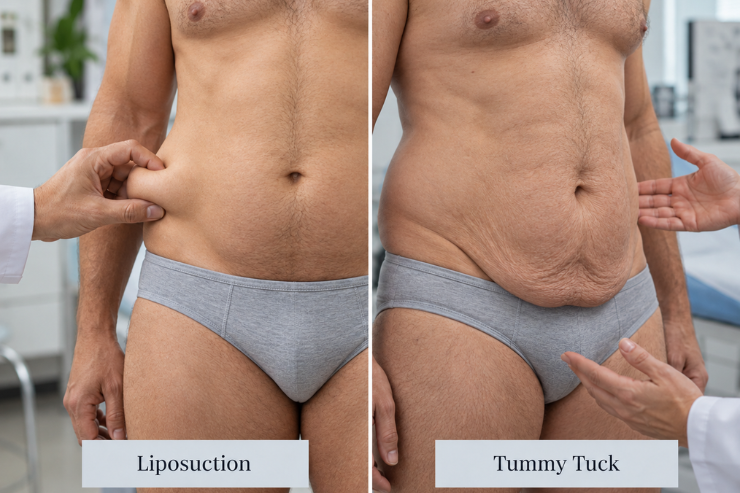
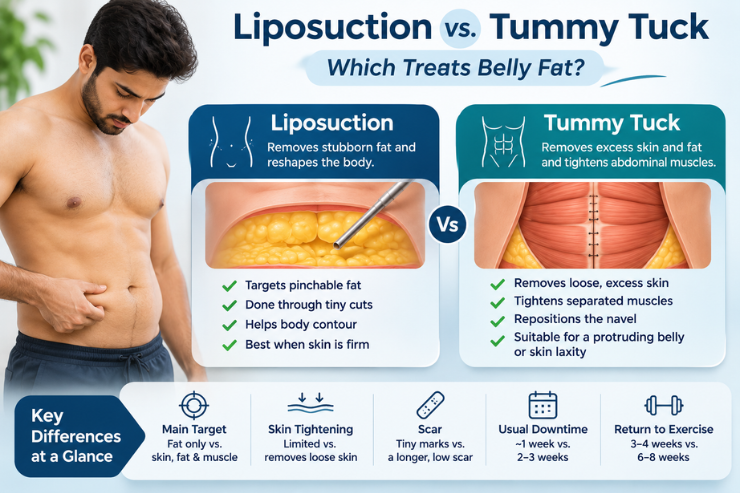
Liposuction removes fat that sits just under the skin, using thin tubes called cannulas. It reshapes the body. It does not tighten it.
- Targets pinchable fat on the lower belly, flanks (love handles), thighs and upper arms
- Done through tiny cuts of a few millimetres
- Treated fat cells are removed permanently, but the remaining fat cells can still grow if weight rises
- Works best when the skin is firm enough to shrink back on its own
What a Tummy Tuck Does
A tummy tuck (abdominoplasty) is a bigger operation with a wider goal. It removes excess skin and fat from the lower abdomen and tightens the stretched abdominal muscles.
- A low incision runs hip to hip, usually placed along the underwear line
- Loose skin is trimmed and the navel is repositioned
- Separated muscles (diastasis recti) are stitched back together
- A mini tummy tuck deals only with the area below the navel, while a full tummy tuck covers the whole abdomen
Which One Treats Belly Fat Better?
The answer depends on what is causing your belly, not just how big it looks.
Liposuction usually suits you if:
- The fat is soft and pinchable
- Your skin is firm and has no stretch marks or sagging
- Your weight is stable and close to a healthy range
A tummy tuck usually suits you if:
- Loose or hanging skin remains after pregnancy or major weight loss
- The belly still pushes out even when your weight is healthy, which may point to separated muscles
- Stretch marks and skin folds are the main concern
Liposuction on loose skin can make the sagging more obvious, because the skin has nothing left to hold on to. When both extra fat and loose skin are present, surgeons sometimes combine the two procedures. Anyone comparing fat removal surgery in Mangalore should expect the surgeon to examine the skin, muscle and fat before recommending either option.
Liposuction vs Tummy Tuck at a Glance
- Main target: Liposuction removes fat. A tummy tuck handles skin, fat and muscle.
- Skin tightening: Limited with liposuction. A tummy tuck removes the loose skin directly.
- Scar: Tiny marks with liposuction. A long, low scar with a tummy tuck.
- Usual downtime: About one week for light work after liposuction. Two to three weeks after a tummy tuck.
- Return to exercise: Around three to four weeks after liposuction. Often six to eight weeks after a tummy tuck.
- Compression garment: Usually worn for several weeks after either surgery.
Individual recovery varies with age, health and the extent of surgery.
The Fat Neither Surgery Removes
There are two kinds of belly fat. Subcutaneous fat sits under the skin, and you can pinch it. Visceral fat sits deep inside the abdomen, around organs like the liver and intestines.
Neither surgery touches visceral fat. A belly that feels hard and firm, rather than soft, often has a lot of it. Diet, exercise, sleep and medical guidance are what bring it down. Neither procedure is a weight-loss treatment either, and both work best on people already near their goal weight.
What Recovery Looks Like
Swelling, bruising and tightness are normal after both surgeries. A compression garment helps the body settle into its new shape.
- Walk short distances from the first or second day to support blood flow
- Avoid heavy lifting and strenuous workouts until your surgeon allows them
- Expect swelling to fade over weeks, with final contours settling over several months
- A tummy tuck may need drains for a few days, and you may need to walk slightly bent forward at first
Who Should Wait
Surgery is best postponed in certain situations:
- You plan to become pregnant in the future
- You are still losing or gaining weight
- You smoke, since it slows healing and raises complication risk
- You have uncontrolled diabetes or blood pressure
- You expect surgery to replace a healthy lifestyle
Risks to Understand
Every surgery carries risk. These can include infection, bleeding, fluid collection under the skin (seroma), uneven contours, delayed healing, visible scars, blood clots and anaesthesia-related problems. Following your surgeon’s instructions closely lowers many of these risks, though none can be removed entirely.
How to Choose a Surgeon
Before any decision, check a few things:
- The surgeon holds recognised qualifications in plastic or cosmetic surgery
- The surgery is done in a fully equipped hospital or operating facility
- A qualified anaesthetist is part of the team
- You receive a clear explanation of the options, the limits and the risks, without pressure to decide quickly
Be cautious of anyone who promises guaranteed results. Honest counselling matters more than any single technique.
Conclusion
Liposuction reshapes stubborn fat, while a tummy tuck also addresses loose skin and weak muscles. The right choice depends on your skin, your muscles and your goals, not on what worked for someone else.
If you are still unsure after reading this, a one-to-one evaluation with a qualified cosmetic surgeon is the most reliable way to understand what suits your body. Take that conversation at your own pace, ask every question on your mind, and decide only when you feel fully informed.
Frequently Asked Questions
1. Does fat come back after liposuction?
Fat cells removed during liposuction do not grow back in that area. However, the fat cells that remain can enlarge if you gain weight, and fat may then show up in other places. Steady eating habits and regular activity help keep results stable.
2. Will liposuction or a tummy tuck help me lose weight?
Not in any meaningful way. Both procedures reshape the body rather than reduce weight. They work best for people who are already close to a healthy weight and want to improve stubborn areas or loose skin.
3. Can liposuction and a tummy tuck be done together?
In selected cases, yes. If someone has both extra fat and loose skin, a surgeon may combine the two in one sitting. This depends on overall health and how much surgery the body can safely handle at one time.
4. Is a tummy tuck safe after a C-section?
Many women opt for a tummy tuck after C-section deliveries once the body has healed and they are done having children. The surgeon usually works around or removes the old scar. Doctors generally advise waiting several months after delivery, and until the weight has settled.
5. Which is more painful, liposuction or a tummy tuck?
A tummy tuck is usually more uncomfortable, since it involves skin removal and muscle tightening. Liposuction causes soreness and bruising, but it is generally milder. Pain medicines prescribed by the surgeon keep both manageable for most people.
This blog is for general educational purposes only and is not a substitute for professional medical advice, diagnosis or treatment. Every individual’s condition and results differ, so please consult a qualified medical professional before making any decision about your health.