Donor Area Care — Why It Matters as Much as the Transplant Itself
When you think about a hair transplant, you probably focus on the treatment area, right? It may be the hairline, crown, temples, or another thinning region.
A hair transplant has two important aspects. One is the new grafts, and the other is the donor area, where those grafts come from.
That source is the hair transplant donor area, usually located at the back and sides of the scalp. The donor area may seem less important, but it plays an equal role in safe planning. Its hair quality, scalp health, and healing can affect both present and future care.
What Is the Hair Transplant Donor Area?
The donor area is usually found across the back and sides of the scalp.
Hair in this region is often more resistant to the common pattern of thinning that affects the hairline, top, and crown. These follicles may therefore be selected for transplantation.
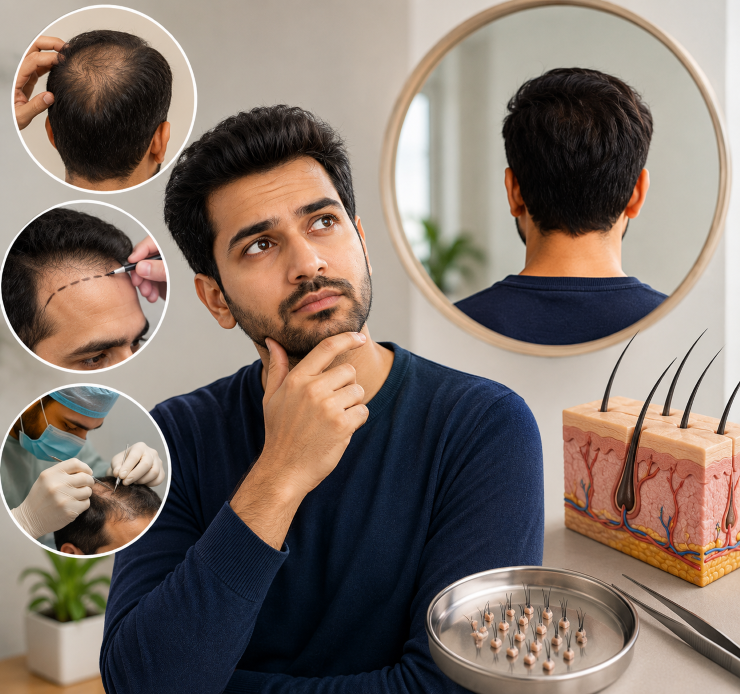
During Follicular Unit Excision, commonly called FUE, small groups of hair roots are removed one by one. These groups are called follicular units or grafts. These grafts are then prepared and transplanted in the planned recipient area.
What one needs to understand is that the donor region is a limited resource. A removed graft does not grow again at the same point. Hair around that point may hide the healed mark. However, the removed graft is no longer available for later use.
Therefore, proper management is important because excessive or poorly distributed removal can leave the area looking thin or uneven.
Why Does Donor Area Care Matter?
As mentioned earlier, donor area care matters because the donor supply is limited.
A hair transplant does not create new follicles. It moves existing follicular units from one part of the scalp to another.
Once a follicular unit is removed during FUE, another follicular unit does not grow at that exact extraction point. The remaining hair may cover the healed site, but the overall donor reserve has still been reduced.
For this reason, donor care is not limited to washing the scalp after surgery. It begins with a detailed assessment before the procedure and continues through careful extraction, healing, follow-up, and long-term planning.
How Is the Donor Area Checked Before FUE?
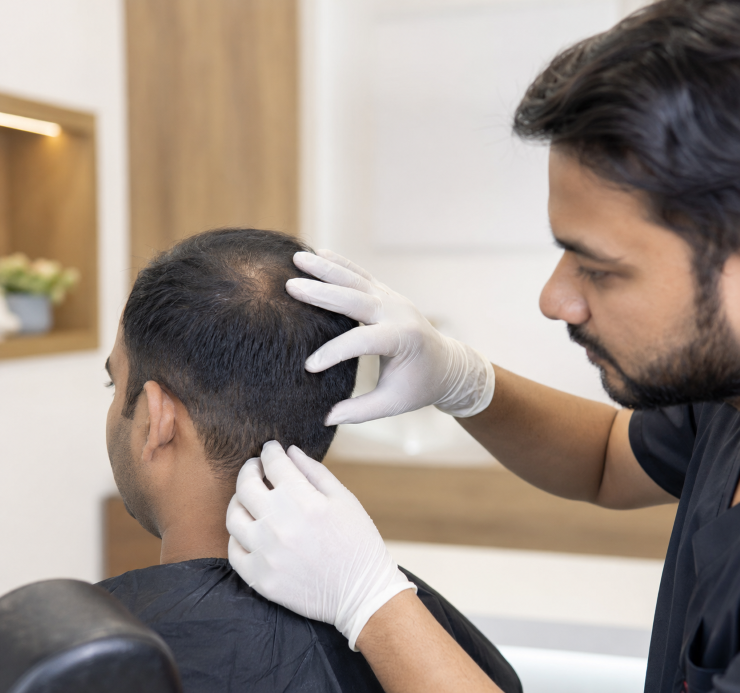
A donor-area assessment involves much more than checking whether there is hair at the back of the scalp.
Several features need to be considered together.
1. Donor hair density
Density refers to the number of follicular units present within a measured area.
Hair may appear dense when it is long. However, closer examination may reveal wider spacing or fewer follicular units than expected.
The doctor assesses whether grafts can be removed while maintaining suitable coverage across the remaining donor area.
2. Hair thickness and texture
Not every hair produces the same visual coverage.
Coarse hair may cover the scalp more effectively than very fine hair. Wavy or curly hair may also create a different coverage pattern from straight hair.
The contrast between hair colour and scalp colour matters as well. A stronger contrast may make thinning more visible.
These features help guide planning, but they should never be used to promise a specific level of density or coverage.
3. Stability of the donor zone
The donor area should be checked for miniaturisation.
Miniaturised hairs have become thinner and weaker. They may be affected by the same progressive hair-loss process occurring elsewhere on the scalp.
A zone that looks dense today may not remain stable in the future. Harvesting from an unstable area can affect long-term planning.
4. Scalp health
The scalp should be examined for conditions that may affect healing or hair stability.
These may include:
- Active redness or inflammation
- Scaling or persistent dandruff-like changes
- Folliculitis
- Infection
- Scarring
- Patchy hair loss
- Previous surgery marks
An active scalp concern may need to be assessed or managed before a procedure is considered.
5. Previous hair transplants
Previous procedures can change the available donor supply.
The doctor may look for:
- Old FUE extraction marks
- Unevenly harvested areas
- A previous strip scar
- Reduced donor density
- Signs of overharvesting
- Changes in scalp sensation
A new graft estimate should not be based only on the donor area’s outward appearance. Previous removal must also be taken into account.
6. Medical and hair-loss history
The assessment may also include:
- Age and family history
- Current pattern of hair loss
- Rate of recent progression
- Medicines and supplements
- Smoking history
- Health conditions
- Allergies
- Previous wound-healing concerns
Patients should provide a complete and accurate medical history. Prescription medicines should not be stopped without guidance from the doctor who prescribed them.
Why Does the Donor Area Affect Long-Term Planning?
Hair loss may continue after a transplant.
Hair that was not transplanted can still become thinner over time. This may change the appearance of the hairline, middle scalp, or crown years after the procedure.
A thoughtful plan therefore considers both present and future needs.
Good donor management aims to:
- Preserve an even appearance at the back and sides
- Avoid unnecessary donor depletion
- Account for possible future hair loss
- Reduce the risk of patchy extraction
- Retain suitable options where possible
The highest possible graft number is not automatically the most appropriate number.
The plan should reflect the donor density, hair characteristics, recipient area, age, existing pattern of loss, and possible future progression.
Does FUE Hair Transplant Leave Scars in the Donor Area?
FUE does not leave the single long scar linked with strip surgery. However, FUE is not scarless.
Each graft removal leaves a small circular extraction site. As the area heals, it may leave a tiny dot-like scar.
These marks are usually spread across the donor region. The surrounding hair may make them less noticeable, especially when the hair is not cut extremely short.
The visibility of FUE scars may depend on:
- Extraction spacing
- Number of extraction sites
- Punch size
- Skin tone
- Healing response
- Remaining donor density
- Hairstyle and hair length
Calling FUE “scar-free” is an unrealistic expectation. A more accurate explanation is that FUE usually leaves small, distributed extraction scars rather than one linear scar.
What Is Donor-Area Overharvesting?
Overharvesting occurs when more follicular units are removed than the donor area can reasonably support.
It may leave the scalp looking:
- Thin
- Patchy
- Uneven
- See-through
- Moth-eaten in appearance
It can also reduce the number of suitable follicles available for future planning.
Overharvesting is not determined only by the total number of grafts removed. Problems may also occur when too many grafts are taken from one section or when extraction extends into less stable donor zones.
This is why graft numbers should be based on individual donor capacity rather than a standard package or fixed target.
What Happens During FUE Donor Site Healing?
Immediately after FUE, the donor area may show many small red extraction points.
Common early changes may include:
- Mild soreness
- Tightness
- Itching
- Crusting
- Redness
- Temporary numbness or altered sensation
Small scabs may remain for several days. They commonly take around one to two weeks to clear, although the timeline differs between people and aftercare plans.
The scalp may begin to look settled before healing is fully complete. Aftercare should therefore continue for the period advised by the treating surgeon.
Can shock loss occur in the donor area?
Temporary shedding may occasionally occur around the donor region after surgery.
This is sometimes called donor-area shock loss or donor effluvium. It may be linked to surgical trauma or changes affecting nearby existing hairs.
Any marked, patchy, or unexpected thinning should be reviewed by the treating doctor rather than managed with home remedies.
How Should the Donor Area Be Cared for After FUE?
Aftercare instructions can vary according to the scalp, procedure, health history, and treating surgeon’s protocol.
The personalised instructions given by the treating team should always take priority.
1.Wash the scalp gently
Wash only from the time advised by the treating doctor.
During early healing, avoid:
- Strong water pressure
- Forceful rubbing
- Scratching
- Rough towel drying
- Very hot water
The aim is to keep the area clean without irritating the small extraction sites.
2. Do not pick the crusts
Crusting is part of the early healing process.
Picking or scratching may irritate the skin and cause bleeding. Scabs should be allowed to loosen according to the washing and aftercare instructions provided.
3. Reduce friction
Repeated rubbing can make the donor area uncomfortable.
Tight caps, helmets, shirt collars, and firm pillow contact may need to be avoided temporarily. Patients should ask when particular headwear can be used safely.
4. Avoid unapproved products
Do not apply random products to the donor area.
This includes:
- Hair oils
- Hair colour
- Strong antiseptics
- Herbal mixtures
- Home remedies
- Steroid creams
- Medicated lotions
Only products approved by the treating doctor should be used during healing.
5. Follow activity restrictions
Heavy exercise, sweating, dust exposure, swimming, and direct sunlight may need to be limited during early healing.
The duration of these restrictions varies. Personalised instructions are more reliable than following a general timeline found online.
6. Use medicines only as directed
Take prescribed medicines according to the advised schedule.
Do not independently start, stop, or restart:
- Blood-thinning medicines
- Antibiotics
- Pain medicines
- Anti-inflammatory medicines
- Supplements
- Topical hair-loss treatments
Any medicine-related change should be discussed with the relevant treating doctor.
When Should the Donor Area Be Reviewed?
Routine follow-up allows the doctor to examine:
- Wound healing
- Redness and crusting
- Donor coverage
- Scarring
- Temporary shedding
- Persistent discomfort
- Signs of infection
Contact the treating team earlier when there is:
- Pain that is becoming stronger
- Redness that is spreading
- Increasing warmth or swelling
- Pus or unusual discharge
- Fever
- Persistent bleeding
- Slow wound healing
- Marked patchy thinning
- Concerning or prolonged numbness
These signs do not always indicate a serious complication. However, they should be assessed properly instead of being treated at home.
Donor Area Care Protects Present and Future Options
The recipient area may receive the most attention, but the donor area makes the transplant possible.
Its condition influences graft planning, healing, scar visibility, remaining density, and the options that may be available if hair loss progresses.
Careful assessment before surgery is therefore just as important as appropriate donor area care after the procedure.
A suitable plan should respect the limits of the donor supply rather than focusing on a high graft number alone. As hair transplant results and healing timelines vary, patients should consult their treating doctor for a personalised assessment and follow the aftercare plan prepared for their scalp and procedure.
Author
Dr. Chandra
Board-certified Plastic and Cosmetic Surgeon (MCh)
The Lead Surgeon at Radiant Roots Hair Transplant & Aesthetic Surgery Centre, Mangalore.
FAQs: Hair Transplant Donor Area Care
Does hair grow back in the FUE donor area?
The follicular units removed during FUE do not regrow at the extraction points. The hair follicles left behind continue to grow and may cover the small healed sites.
Can the donor area be used for another hair transplant?
Sometimes, but not in every case.
This depends on the remaining density, previous extraction pattern, scalp condition, scarring, hair-loss progression, and likely future needs. A fresh donor-area assessment is required before another procedure is considered.
How long does FUE donor site healing take?
Small scabs often clear within one to two weeks. Redness, sensitivity, or altered sensation may remain longer in some people.
Healing time varies according to the procedure, skin response, number of extraction sites, and aftercare.
Can the donor area become thin after FUE?
Temporary shedding can occur after surgery.
Long-term visible thinning may also develop when too many grafts are removed or when extraction is poorly distributed. Careful planning helps reduce avoidable donor depletion.
Is itching normal after FUE?
Mild itching may occur as the small extraction sites heal.
Scratching should be avoided. Severe itching, a rash, discharge, or worsening redness should be reported to the treating doctor.
[This content is for general educational purposes and does not constitute medical advice. Individual results vary. Please consult a qualified medical practitioner for a personalised assessment.]