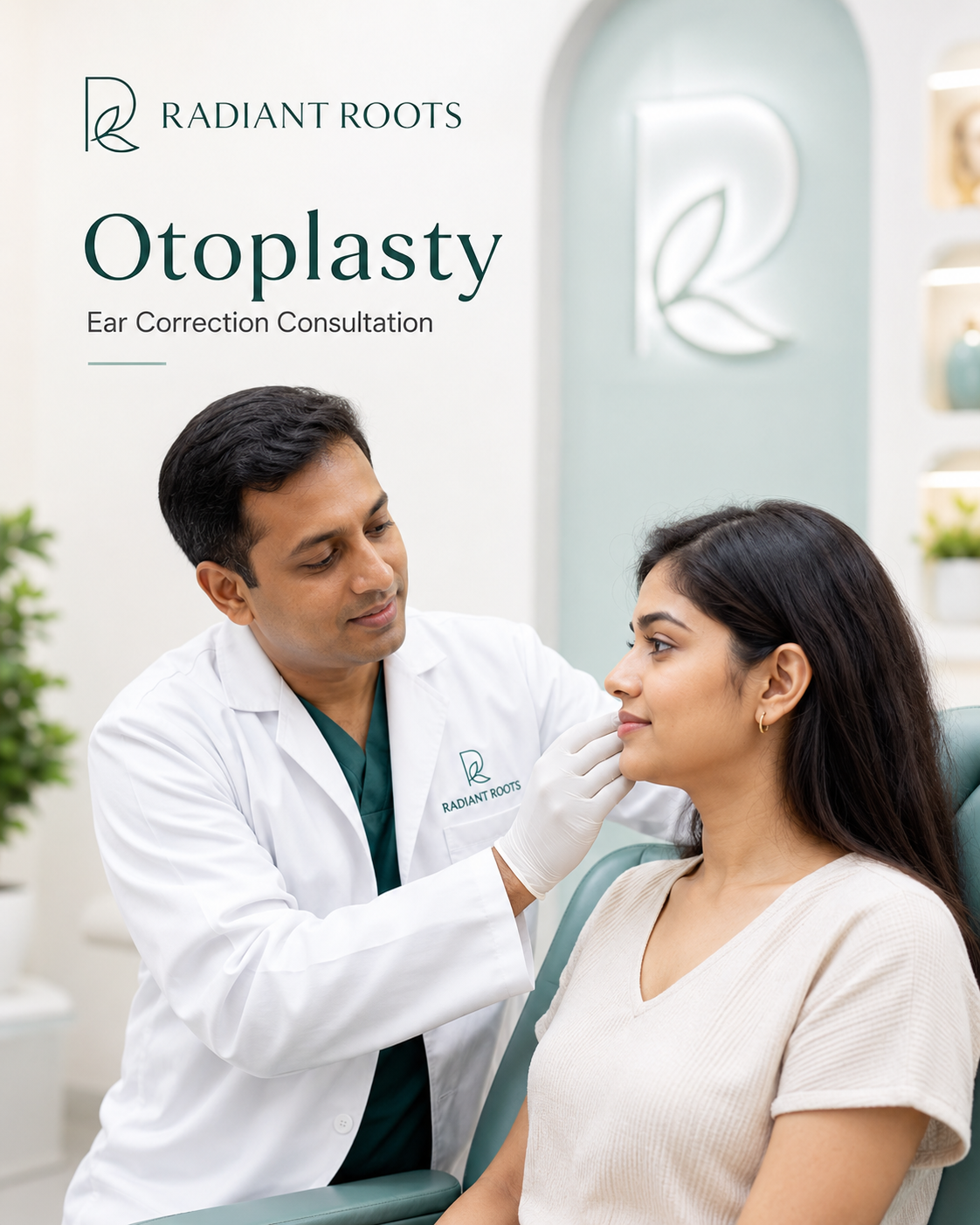
What Is Otoplasty? How It Works, and What to Expect
Do you find yourself or your child constantly pulling hair forward to hide the ears? Or avoiding certain hairstyles altogether? It's a concern more people share than they openly admit — and it has a straightforward solution.
Otoplasty, commonly known as ear correction surgery or ear pinning surgery, is a simple cosmetic procedure that reshapes or repositions the ears so they sit closer to the head. It's one of the most rewarding procedures in cosmetic surgery — with a high satisfaction rate and a recovery period that is far simpler than most people imagine.
What Is Otoplasty?
Otoplasty is a surgical procedure that corrects the shape, size, or position of the ears. It doesn't affect your hearing in any way — it only addresses the outer ear (the part you can see).
Most people seek otoplasty for ears that:
- Stick out too far from the head
- Are uneven or asymmetrical
- Were affected by injury or trauma
- Didn't develop a natural fold (a condition called Congenital Ear Deformity)
The goal is always natural-looking results — ears that sit proportionally and blend with the face, not ears that look "operated on."
Who Is a Good Candidate?
Otoplasty is suitable for both children and adults. Here's a quick breakdown:
For Children
Most surgeons recommend waiting until the child is at least 5–6 years old. By this age, ear cartilage is firm enough to hold the correction, and the child is old enough to communicate any discomfort during recovery.
For Adults
There's no upper age limit. Adults who have lived with protruding ears for years and finally want to address it are excellent candidates. If you're in good health and have realistic expectations, otoplasty can be a life-changing decision.
How Is the Procedure Done?
Otoplasty is typically performed under local anaesthesia for adults and general anaesthesia for children. The procedure usually takes 1–2 hours.
The Basic Steps
- A small incision is made behind the ear, in the natural crease — so any scarring is completely hidden
- The cartilage is reshaped and repositioned closer to the head
- Sutures are placed to hold the new shape in position
- The incision is closed and a soft bandage is wrapped around the head
Most patients go home the same day. It's a day-care procedure.
What Does Recovery Look Like?
Recovery from otoplasty is straightforward. Here's what to generally expect:
Week 1
You'll wear a bandage around your head for the first few days. There may be mild swelling and tenderness — this is completely normal. Most people manage well with basic pain relief.
Week 2–3
The bandage comes off. You'll switch to a soft headband, especially at night, to protect the ears while sleeping. Swelling gradually reduces.
After 4–6 Weeks
Most patients feel completely comfortable and resume all normal activities. The final result becomes fully visible once the swelling has completely settled — usually by 2–3 months.
What Results Can You Expect?
Otoplasty delivers permanent results. Once the cartilage heals in its new position, the correction holds for life.
Patients consistently report:
- Improved confidence in choosing hairstyles and accessories
- No more self-consciousness in photographs or social situations
- A natural look that nobody around them can identify as "done"
The scar behind the ear fades significantly over time and is not visible in everyday life.
Is Otoplasty Safe?
Yes — otoplasty is one of the safest cosmetic procedures available today. Complications are rare, and when performed by an experienced aesthetic surgeon, the risks are minimal.
Mild swelling, temporary numbness, or slight asymmetry during healing are common — and all resolve naturally. Severe complications are very uncommon.
The most important factor in a safe, successful outcome is choosing the right surgeon.
How Much Does Otoplasty Cost?
The cost varies depending on the complexity of the correction, whether one or both ears are being treated, and the clinic you choose. In India, otoplasty is significantly more affordable than in Western countries without any compromise on quality.
It's always best to get a proper consultation first — the surgeon will assess your specific case and give you a clear picture of what the procedure involves and what it will cost.
Finding the Right Surgeon
Otoplasty requires both surgical precision and an eye for natural aesthetics. The result should enhance your face — not draw attention to itself.
When choosing a surgeon, look for someone who:
- Specialises in cosmetic and plastic surgery
- Has experience specifically with ear correction procedures
- Takes time to understand your goals during consultation
- Shows you realistic before-and-after outcomes
A good cosmetic clinic in Mangalore or your city will always prioritise your comfort, safety, and natural results over rushing you into a procedure.
Stop Hiding. Start Deciding.
Protruding ears are more common than most people realise — and correcting them is simpler than most people expect. Otoplasty is a safe, permanent, and highly effective solution that has helped thousands of people feel comfortable in their own skin.
If you or your child have been thinking about ear correction surgery, the right place to start is a one-on-one consultation with a qualified aesthetic surgeon.
At Radiant Roots, Dr. Chandra — one of Mangalore's most trusted names in cosmetic surgery in Mangalore — brings together surgical precision and a deeply personalised approach to every procedure. From your first consultation to your final result, you're in expert hands.
FAQs
1. Will otoplasty leave a visible scar? The incision is made in the natural crease behind the ear, so the scar is hidden from view. Over time, it fades significantly and is not noticeable in everyday situations.
2. Is otoplasty painful? The procedure is performed under anaesthesia, so there's no pain during surgery. Post-operatively, patients experience mild soreness for a few days, which is easily managed with basic pain relief.
3. Can otoplasty be done for just one ear? Yes. If only one ear is protruding or asymmetrical, the procedure can be performed on a single ear. The surgeon will assess both ears and advise accordingly.
4. At what age can a child get otoplasty? Most surgeons recommend waiting until the child is at least 5–6 years old, when the ear cartilage is developed enough for a stable, lasting result.
5. How long do the results of otoplasty last? Otoplasty results are permanent. Once the cartilage heals in its corrected position, it stays that way. There is no need for repeat procedures in the vast majority of cases.