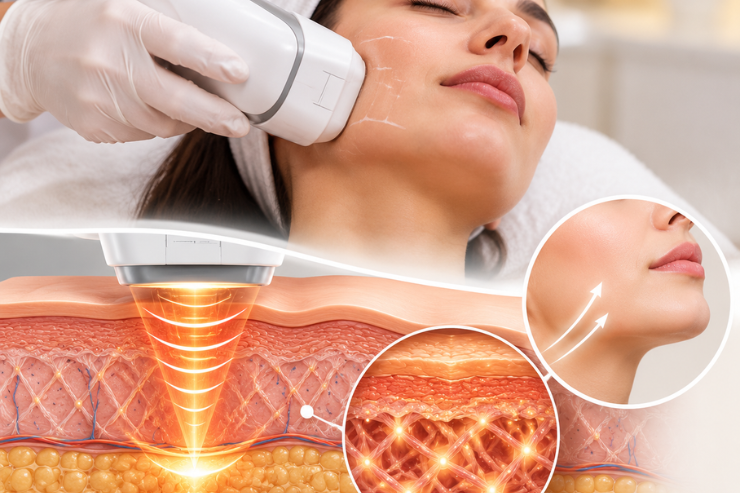
HIFU Treatment for Skin Tightening: How It Works
In my consultations, one of the most common concerns I hear is, "My skin feels less firm than it used to — is there something that can help without surgery?" Loose skin and fine lines are a natural part of aging, and it's a question I understand well, both as a doctor and as someone who sees how much it can affect a person's confidence.
HIFU, or High-Intensity Focused Ultrasound, is one of the non-surgical options I often discuss with patients exploring this concern. In this article, I want to walk you through what HIFU actually is, how it works beneath the skin, and what you can realistically expect from it.
What HIFU Treatment Is
HIFU stands for High-Intensity Focused Ultrasound. It is a non-invasive procedure that uses focused ultrasound energy to stimulate deeper layers of the skin without cutting or injecting anything.
Unlike lasers, which work on the skin's surface, HIFU energy passes through the top layers and reaches the deeper tissue — the same layer that is tightened during a surgical facelift.
Key Points
- No incisions, needles, or anaesthesia are typically required
- Works on deeper skin layers, not just the surface
- Commonly discussed as an option for skin laxity and early signs of ageing
How HIFU Works
HIFU devices deliver focused ultrasound waves to a precise depth beneath the skin. When this energy reaches the target layer, it generates controlled thermal heat at specific points.
This heat is intended to trigger the body's natural healing response, which may include the production of collagen and elastin — two proteins that give skin its structure and firmness.
The Process, Simplified
- Ultrasound energy is focused at a specific depth
- Heat is generated at that point without affecting the surface
- The body responds by initiating a natural repair process
- Over time, this may contribute to firmer-looking skin
What HIFU Does to the Skin
The heat generated during HIFU is understood to encourage the skin's own repair mechanisms. This is a gradual biological process rather than an instant change.
Over the following weeks, some people notice their skin appears more lifted and toned as new collagen forms. Results and experience can vary from person to person based on skin type, age, and individual response.
HIFU for Face, Jawline, Neck and Under-Chin Areas
HIFU is frequently discussed for use on:
- Brow area — for a subtle lift around the eyes
- Cheeks and mid-face — where sagging is commonly noticed first
- Jawline — to help redefine a softened jaw contour
- Neck and under-chin — areas that are otherwise difficult to treat non-surgically
Each area may require a slightly different approach depending on skin thickness and the concern being addressed, which is why a professional assessment is important before proceeding.
Who May Benefit From HIFU
HIFU is generally considered by people who:
- Notice mild to moderate skin sagging
- Are looking for a non-surgical option before considering surgery
- Want to address early signs of ageing around the face and neck
- Prefer minimal downtime
Who May Not Be a Suitable Candidate
HIFU is not appropriate for everyone. It may not be suitable for individuals who have:
- Severe skin laxity, where surgical correction may be more appropriate
- Active skin infections or open wounds in the treatment area
- Certain implanted medical devices
- Specific skin or medical conditions that a qualified professional would need to evaluate first
A consultation with a qualified doctor is the only reliable way to determine candidacy, since every individual's skin and medical history are different.
What Happens During Treatment
A typical HIFU session generally follows these steps:
- The skin is cleansed, and the treatment area is marked
- Ultrasound gel is applied for smoother device movement
- The device is passed over the marked areas, delivering focused energy
- A cooling or soothing step may follow, depending on the clinic's protocol
Does HIFU Hurt?
Sensation during HIFU varies from person to person. Most people describe it as a warm, tingling, or slight prickling feeling as the energy reaches the deeper layer.
Some areas — particularly closer to the bone, such as the jawline — may feel more sensitive than others. Numbing cream may be used in some cases to improve comfort, depending on individual tolerance.
How Long Does a Session Take?
Session duration depends on the area being treated.
- Smaller areas (such as the brow or under-chin) may take around 30–45 minutes
- Full-face treatments may take closer to 60–90 minutes
When Do HIFU Results Appear?
HIFU results are not immediate. Because the treatment relies on the body's natural collagen-building process, visible changes typically develop gradually.
Most people begin noticing improvement around 8–12 weeks after treatment, with results continuing to develop for up to 3–6 months.
How Long Can Results Last?
Results are generally reported to last anywhere from 12 to 18 months, though this varies based on age, skin condition, and lifestyle factors such as sun exposure and skincare habits.
Since ageing is an ongoing process, periodic maintenance sessions may be discussed with a doctor to help sustain results over time.
How Many Sessions May Be Needed?
For many individuals, a single session is enough to see noticeable improvement, since the effects build gradually over several months.
Depending on the degree of skin laxity and individual goals, a doctor may recommend a follow-up session after several months. This is assessed on a case-by-case basis during consultation.
HIFU Side Effects and Risks
HIFU is generally considered a low-risk procedure when performed by a trained professional. Some temporary effects that may occur include:
- Mild redness or swelling
- Slight tenderness in the treated area
- Temporary numbness or tingling
- Rare instances of small bruising
These effects are typically short-lived and resolve on their own within a few hours to a few days.
HIFU Aftercare
Aftercare is usually straightforward, but following a few general guidelines can support the healing process:
- Use a gentle, fragrance-free cleanser and moisturiser
- Apply sunscreen daily, as skin may be more sensitive to sun exposure
- Avoid harsh exfoliants or active ingredients for a few days
- Stay hydrated to support the skin's natural repair process
Specific aftercare instructions should always come from the treating doctor, based on individual skin response.
HIFU vs Other Skin-Tightening Treatments
| Aspect | HIFU | RF (Radiofrequency) | Laser Skin |
| Depth of action | Deep (SMAS layer) | Mid-dermis | Tightening |
| Downtime | Minimal to none | Minimal | Surface to mid-dermis |
| Best suited for | Mild-moderate sagging | Skin texture, mild laxity | Minimal to mildSurface tone, fine lines |
| Result timeline | 2–3 months | Few weeks | Few weeks |
Each technology works differently, and the right choice depends on individual skin concerns — best determined through a professional evaluation.
HIFU vs Facelift
This is one of the most common comparisons patients ask about.
- HIFU is non-surgical, requires no downtime, and offers gradual, natural-looking improvement — but it does not replace the results of surgery for significant sagging.
- A facelift is a surgical procedure that involves incisions, anaesthesia, and recovery time — but can address more advanced skin laxity that non-surgical treatments cannot fully correct.
Neither option is universally "better" — it depends entirely on the degree of skin laxity and what the individual is looking to achieve. This is a decision best made in consultation with a qualified cosmetic surgeon.
Common Myths About HIFU
Myth: HIFU gives instant results.
Fact: Results build gradually as collagen regenerates over weeks to months.
Myth: HIFU is the same as a facelift.
Fact: HIFU is non-surgical and addresses milder skin laxity; it does not replicate surgical results.
Myth: HIFU works the same for everyone.
Fact: Outcomes vary based on skin type, age, and degree of sagging.
Myth: More sessions always mean better results.
Fact: Over-treatment isn't necessarily better — the right frequency should be guided by a professional assessment.
In Conclusion
HIFU is one of several non-surgical options available today for addressing early signs of skin laxity, and understanding how it works can help in having an informed conversation with a qualified professional. To learn more about your options, book a consultation with a qualified cosmetic surgeon.
Author:
Dr. Chandra
Board-certified Plastic and Cosmetic Surgeon (MCh)
The Lead Surgeon at Radiant Roots Hair Transplant & Aesthetic Surgery Centre, Mangalore.
Frequently Asked Questions
1. Is HIFU treatment painful?
Most people feel a warm or tingling sensation rather than sharp pain. Some spots may feel more sensitive than others, but it's generally tolerable without anaesthesia.
2. How soon will I see a difference in my skin?
You won't see change overnight. Most people start noticing firmer, more lifted skin around 2–3 months after the session, as it takes time for the body to build new collagen.
3. Can HIFU replace a facelift?
Not exactly. HIFU works well for mild to moderate sagging, but if the skin laxity is more advanced, surgery may give a more noticeable and longer-lasting result.
4. Is there any downtime after HIFU?
Most people can return to their daily routine right after the session. Some mild redness or swelling can occur but usually settles within a day.
5. How do I know if HIFU is right for me?
The best way to know is through an in-person consultation, since skin type, age, and the extent of sagging all play a role in whether HIFU is a suitable option for you.
This article is for general informational and educational purposes only and does not constitute medical advice. Individual results, suitability, and treatment plans vary from person to person and can only be determined through an in-person consultation with a qualified medical professional.